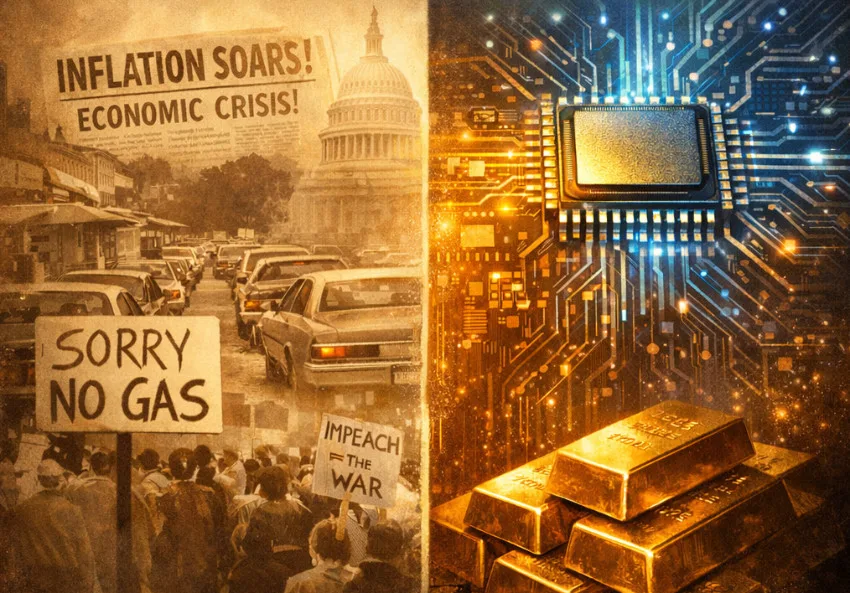
The 1970s were a catastrophe by almost any measure. Runaway inflation, political scandal, energy crises, a humiliating military defeat, and a government that lurched from one disaster to the next. Real wages declined. Savings were destroyed. The national mood was one of despair and decline.
But the 1970s weren't the end of America. While everyone was focused on gas lines and stagflation, Intel was building the microprocessor and two kids in a garage were founding Apple. That revolution powered a two-decade boom once serious leadership finally arrived.
Meanwhile real assets — gold, commodities, energy, productive farmland — crushed paper assets for the entire decade. Investors who understood what was happening early did extremely well.
The parallels to today are hard to ignore. Runaway deficits, weaponized currency, collapsing institutional trust, inflation that won't die, and a political class that refuses to make hard choices. We've been running the same playbook — and we're seeing the same consequences.
Yet we also have transformative technologies on the horizon that most people are too distracted by the chaos to notice.
In this month's letter, we walk through the full comparison, highlighting where we are in the cycle, what worked then, and what works now.
The Last Time Everything Went Wrong On May 22, 1964, President Lyndon Johnson stood before 90,000 people at the University of Michigan and unveiled his vision for “the Great Society.” It was ambitious. It was idealistic. And it would plant the seeds of fiscal destruction that took more than a decade to fully bloom. Johnson…
