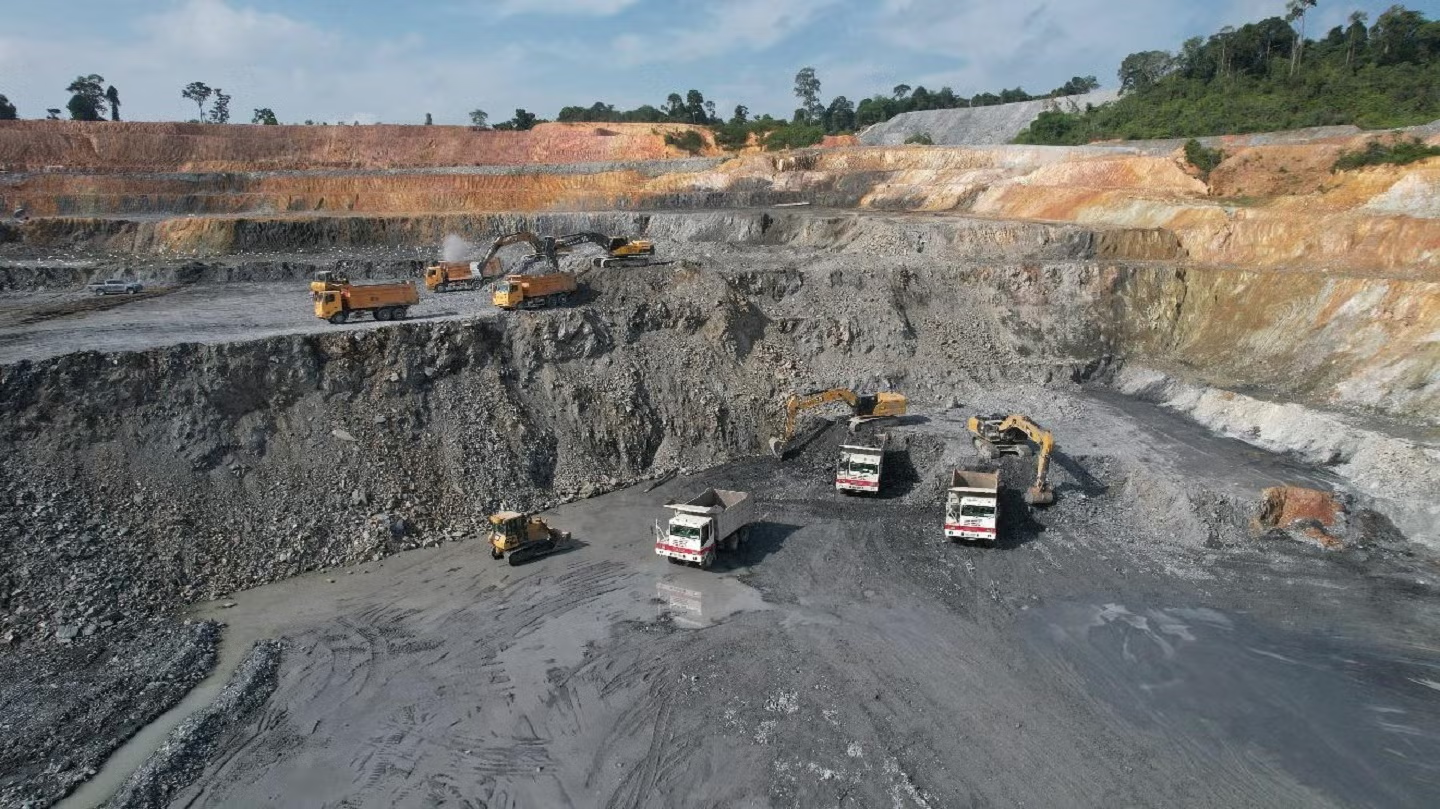
In September 1889, a mine manager from Australia named William Bibby was trekking over a mountain range in the jungle of what is now Malaysia, a couple of hundred miles north of Singapore. With him were his eldest son, seven other men he had brought from Australia, and two dozen hired porters carrying the luggage.
Bibby was 52 and had spent thirty years mining gold in Australia. A syndicate of Australian investors had bought the rights to dig for gold at a place called Raub, deep in the Malay jungle, and hired him to turn it into a working mine.
They had bought it on the strength of stories going around Australia, which said the ground at Raub was so rich you could back a cart into the ore. At one meeting an investor told Bibby that, as far as he could see, the only problem would be keeping all that gold safe.
Bibby chuckled and told the investor that, in his experience, the hard part was getting it out of the ground.
There was no road to Raub. The party went in from Kuala Lumpur, trekked for a week over the mountains, and did the last stretch on a pony track.
The forty tons of machinery, including a boiler, pumps and the ten iron hammers that pound ore to powder so the gold can be washed out, could not go that way. It all went by sea to the east coast and then up three rivers by boat. And that’s after a crew had spent nearly a month clearing the last river of snags. From the riverbank, the equipment was then broken down into parts and hand-carried the rest of the way to Raub.
But finally… the party topped the last ridge where they could look down into the Raub valley. “There was absolutely nothing to be seen,” Bibby said later. “I was never more disappointed in a place in all my life.”
There was no ore coming out of the ground. There was, in his words, “nothing but jungle and swamp, swamp and jungle,” and one old pit full of water, where a local chief had ruined himself trying to dig for gold.
Bibby’s first report home said he did not know where he could find a ton of rock that would pay the cost of crushing it. If he hadn’t had eight men under contract, he said, he would have turned around the next morning.
He stayed. In 1891 a storm flooded the mine with water that had turned the sulphur-bearing rock into sulphuric acid. It ate through the pumps.
The next year a Malay chief led a rebellion against the British, who had taken control of the territory the year before Bibby arrived; the mine was under siege for the better part of a year, with every man sleeping beside a rifle.
Then, finally, in 1893, the miners broke into a spectacularly rich pocket of ore in a new pit at Raub.
Bibby spent the rest of his life building the mine out, but the shareholders in Australia balked every time he asked for money for more crushers. They wanted the mine to pay for its own machinery out of profits.
He died in 1900, quite young at age 63. But the mine he had started in a swamp ran for 72 years. By the time it closed in 1961, it had produced nearly a million ounces of gold, worth close to $4 billion at today’s price.
Forty miles north of Raub, on the same belt of gold-bearing rock, British companies put machinery onto a hill the year before Bibby arrived. In its first 120 years, mined on and off, that hill gave up about 85,000 ounces in all, a small mine by any standard.
By 2007 it was sitting idle. Now, the company that bought it that year has dug more than five times what the hill gave up in the 120 years before.
Today that hill looks to the market the way Raub looked to Bibby from the ridge— where’s the gold?
But there may be more to the story.
That is what we want to show you this month.