For decades, the idea of the Strait of Hormuz shutting down lived only in war games and think-tank papers.
Now it’s happening.
Roughly 20% of global oil and 25% of LNG used to pass through that narrow stretch of water. Today, flows have collapsed. Tankers aren’t moving. Production is being shut in. And the system is starting to strain in ways the market still isn’t fully pricing.
Most commentary is focused on the obvious—oil prices.
That’s not where the real story ends.
In this report, we break down what’s actually happening beneath the surface, and, more importantly, where the second-order effects are starting to bite.
Two areas stand out:
1) Coal — the unexpected winner
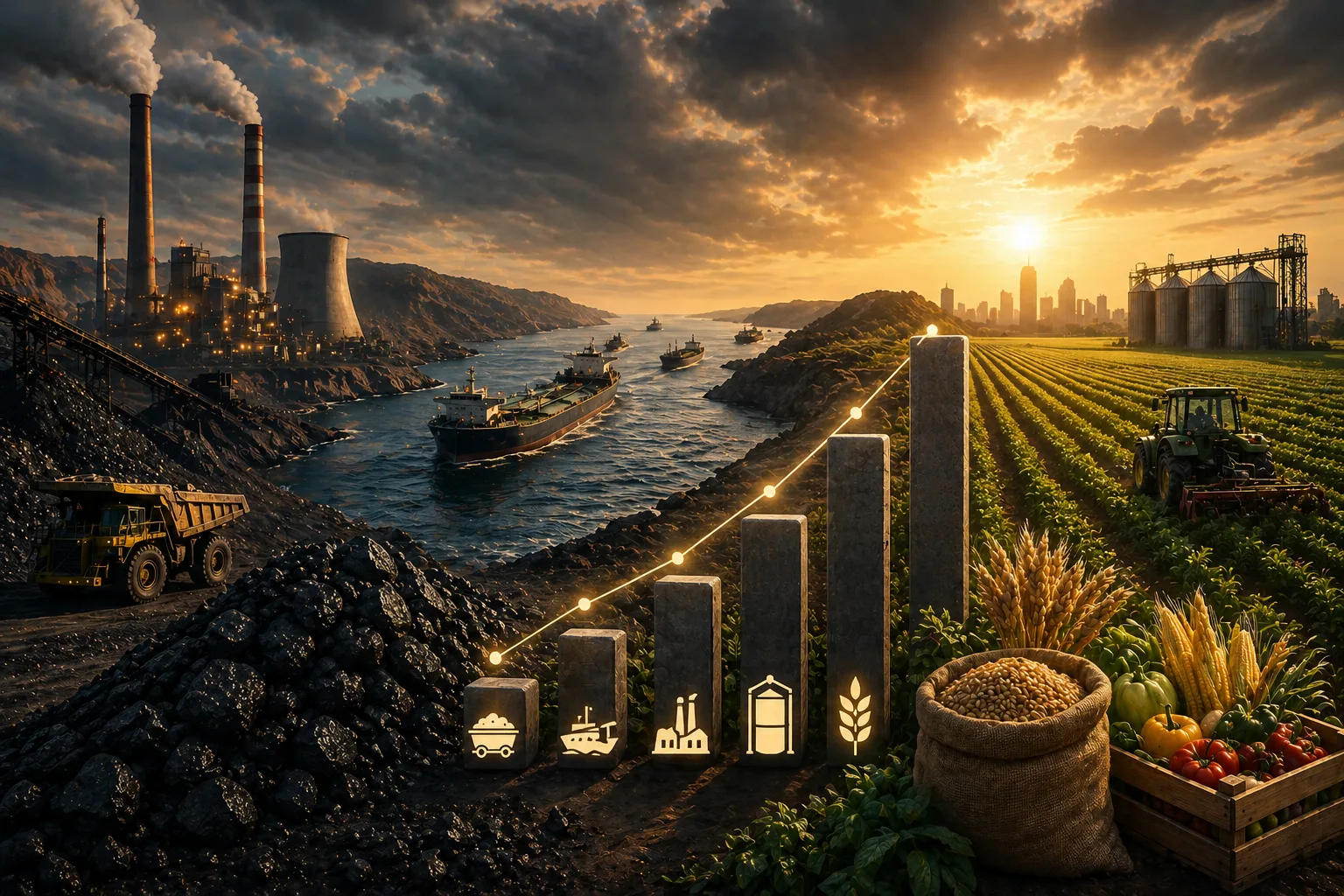
While LNG disappears and gas markets tighten, countries are quietly turning back to what works. Coal. Cheap, available, and already built into the system. Demand is rising fast, and supply is constrained after years of underinvestment.
2) Agriculture — the next bottleneck
Fertilizers are getting trapped, production is falling, and we’re right in the middle of planting season. That combination tends to show up later, in lower yields and higher food prices.
Markets are still treating this as temporary. We’re not so sure. If that assumption breaks, the repricing could be sharp—and not limited to energy.
Even if the Strait reopened tomorrow (unlikely), it would take months for supply chains to normalize. Some damage may take years.
In other words: higher energy costs, tighter inputs, and knock-on effects across the real economy.
We walk through the data, the mechanics, and what this means going forward—without the usual noise.
There is a body of water, roughly 39 kilometres wide at its narrowest point, located between the Iranian coastline to the north and the shores of Oman to the south: the Strait of Hormuz. Its free passage has been a fundamental condition of the modern global economy. At just 167 kilometres long, the Strait is…
